✓ Clase completada
Lectura · A2
Aquel fin de semana
Lectura A2 · pasado simple y continuo
ObjetivoTres fines de semana contados en pasado. Fíjate en cuándo el texto usa el pasado simple y cuándo el continuo: casi siempre hay algo que estaba pasando, y algo que lo interrumpe.

Antes de leer
Estos relatos están en pasado, y mezclan las dos formas que conoces:
- pasado simple para lo que pasó y terminó: the lights went out, he laughed.
- pasado continuo para lo que estaba pasando de fondo: I was cooking, it was raining.
El primero es corto: léelo en voz alta. No busques todas las palabras: al final de cada relato tienes las importantes.
Relato 1 · corto
The lights went out
A2~117 palabrasOn Saturday night I was cooking rice when the lights went out. The whole building was dark.
I opened the door. My neighbours were standing on the stairs with their phones. Nobody knew what to do.
Doña Carmen from the third floor had candles. Her husband had a guitar. We sat on the stairs and talked. Some people were singing. A boy was doing his homework with the light from his phone.
The lights came back at eleven, and everybody went home. My rice was cold.
On Monday I saw Doña Carmen in the lift. She said, “Good morning, neighbour!” I lived in that building for three years, and until that Saturday I didn’t know her name.
Vocabulario
- went out — se apagaron (las luces)
- stairs — escaleras
- candles — velas
- homework — tareas
- lift — ascensor
Comprensión
Toca una pregunta para ver su respuesta.
What was the writer doing when the lights went out?
Cooking rice.
Where were the neighbours?
On the stairs, with their phones.
What did Doña Carmen and her husband have?
Candles and a guitar.
What was the boy doing?
His homework, with the light from his phone.
When did the lights come back?
At eleven.
What changed after that Saturday?
The writer and Doña Carmen knew each other. Before, after three years, the writer didn’t know her name.

Relato 2 · medio
The wrong bus
A2~207 palabrasLast year my cousin Juliana was living in Bergen, in Norway, and in March I visited her.
On Sunday she was working, so I went to the city centre alone. I wanted to see the fish market and the old wooden houses. It was raining — it rains a lot in Bergen — but I had a good coat.
I was waiting at the bus stop when a bus arrived. I got on without looking at the number. I was reading a long message from my mother, and I didn’t notice anything for twenty minutes.
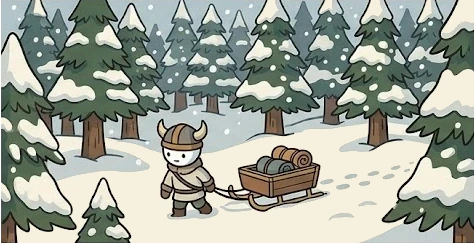
When I looked up, there were no houses. There were trees, a lake and a lot of snow.
I went to the driver. My English was not very good, but I showed him a photo of the fish market. He looked at it and laughed.
“Wrong bus,” he said. “But it’s a nice trip, no?”
At the last stop he got off with me. He was going to have a coffee before he drove back to the city. He bought me one too, and we drank it and looked at the lake.
When I got home, Juliana was making dinner.
“Did you see the market?” she asked.
“No,” I said. “I saw something better.”
Vocabulario
- wooden — de madera
- got on — me subí (al bus)
- notice — darse cuenta
- looked up — levanté la vista
- lake — lago
- got off — se bajó
Comprensión
Toca una pregunta para ver su respuesta.
Why did the writer go to the city centre alone?
Because Juliana was working on Sunday.
What was the weather like?
It was raining.
Why didn’t the writer notice the problem?
They were reading a long message from their mother.
What could the writer see after twenty minutes?
Trees, a lake and a lot of snow — no houses.
How did the writer explain where they wanted to go?
With a photo of the fish market.
What was the driver going to do at the last stop?
Have a coffee before he drove back.
What does “I saw something better” mean?
The trip with the driver was better than the market — an unexpected good day.
Relato 3 · largo
The speech
A2~302 palabrasMy best friend Sebastián got married in Villa de Leyva on a Saturday in June. Three months before the wedding, he called me.
“You’re going to give the speech,” he said. It wasn’t a question.
I wrote the speech many times. I was going to start with a joke about our school, then tell the story of how he met Laura, and finish with a short poem. I printed it and put it in my jacket.
On the day of the wedding, everything went well. The church was beautiful, the sun was shining, and Laura’s family was very friendly. At dinner I was sitting next to her grandmother, who told me about her own wedding in 1962.
After dinner, the music stopped and somebody gave me the microphone. I put my hand in my jacket. The speech wasn’t there.
For a moment I couldn’t say anything. A hundred people were looking at me. Sebastián was smiling, but his eyes were asking: “What are you doing?”
So I didn’t tell the joke, and I didn’t read the poem. I told them about the day we met. We were seven, and I forgot my lunch, so he gave me half of his. I told them he was still the same: he always gives people half of everything he has. And I told Laura that she was getting a very good husband — a husband who never knows where his keys are.
People laughed. Laura’s grandmother was crying. When I gave back the microphone, Sebastián hugged me for a long time and didn’t say anything.
The next morning I found the speech. It was in my other jacket, at the hotel. I read it again on the bus home. It was a good speech, but it was not as good as the one I didn’t write.
Vocabulario
- got married — se casó
- speech — discurso
- printed — imprimí
- microphone — micrófono
- hugged — abrazó
- keys — llaves
Comprensión
Toca una pregunta para ver su respuesta.
Where and when did Sebastián get married?
In Villa de Leyva, on a Saturday in June.
Did the writer choose to give the speech? How do you know?
No — Sebastián didn’t ask. “It wasn’t a question.”
What was the plan for the speech?
A joke about school, the story of how Sebastián met Laura, and a short poem.
What was Laura’s grandmother doing at dinner?
Telling the writer about her own wedding in 1962.
What was the problem?
The speech wasn’t in the jacket.
What story did the writer tell instead?
The day they met, at seven: Sebastián gave the writer half of his lunch.
Where was the speech?
In the writer’s other jacket, at the hotel.
What does the last sentence mean?
The speech from the heart was better than the one on paper.
Simple o continuo
Elige la forma que pide la frase. La acción larga va en continuo; la corta, en simple.
Contesta primero; luego toca «Ver respuesta».
- The sun when the wedding started.(shone / was shining)
Ver respuesta
was shining
- I next to her grandmother at dinner.(sat / was sitting)
Ver respuesta
was sitting
- Somebody me the microphone.(gave / was giving)
Ver respuesta
gave
- A hundred people at me.(looked / were looking)
Ver respuesta
were looking
- I the speech the next morning.(found / was finding)
Ver respuesta
found